


Struggling to Sleep? Reset Your Rhythm and Restore Your Energy Like a Healer 🌿
🧠 We were never really taught how rest works.
Not in a practical way, at least.
Most of what we learned about rest was indirect—things like “get 8 hours,” “go to bed earlier,” or “stop scrolling before bed.” Helpful, sure, but surface-level. None of it really explained why sleep feels easy some nights and impossible on others, even when we’re doing the same things.
And definitely none of it prepared us for what it looks like to try to rest inside a life that isn’t predictable, quiet, or perfectly structured.
🤔 We assume it’s us.
We assume we’re doing something wrong. Not disciplined enough. Not consistent enough. Not trying hard enough.
But most people aren’t struggling with sleep because they’re failing. They’re struggling because their body is responding to variables that were never taken into account in the first place.
Things like stress that hasn’t fully settled, a nervous system that’s still activated from the day, fluctuating schedules, chronic pain, hormones, neurodivergence, or simply being overstimulated for too many hours in a row.
Sleep doesn’t happen in isolation. It’s the result of everything that came before it.
🌙 Your body doesn’t just decide to sleep.
It transitions into it. And that transition depends on whether your body feels regulated enough to let go of alertness.
That’s the piece most people miss. Because from the outside, it looks like a timing issue, but internally, it’s usually a state issue. Which is why trying harder rarely works.

You can go to bed earlier.
You can turn the lights off at the “right” time.
You can follow a routine perfectly.
But if your body is still operating like it needs to stay alert, it will. That’s not a failure. That’s a learned function.
Quality sleep is not something your body performs on command. It’s something it allows when the conditions support it.
📚 Where most sleep advice falls short
A lot of sleep advice focuses on what to do at night: go to bed earlier, turn off your phone, and create a routine. But, very little of it explains why your body might not be ready to sleep when you get there. Because sleep isn’t just about habits, it’s about state.
If your body has been in a constant cycle of stimulation, decision-making, stress, or input all day, it doesn’t immediately shift into recovery just because you got into bed.
There has to be a transition. And for most people, that transition is either too short, inconsistent, or missing entirely.
🌿 Sleep runs on signals, not effort
Your body operates on a circadian rhythm: your internal system that regulates energy, alertness, and rest across a 24-hour cycle. This system is not controlled by discipline. It’s controlled by cues.
Light exposure, movement, food timing, and stimulation all send signals that help your body understand where it is in that cycle. When those signals are inconsistent, your rhythm becomes harder to predict. And when your rhythm is harder to predict, sleep becomes less reliable.
☀️ Daylight is more powerful than most realize
Getting outside, even briefly, early in the day helps anchor your rhythm. It tells your body that the day has started, which then sets off a chain of internal processes that eventually lead to feeling tired later on.
Without that signal, your body has to guess. And when it’s guessing, sleep becomes less predictable.
🕰️ Consistency helps—not in the way you think
This isn’t about having a rigid bedtime down to the minute. It’s about giving your body a general pattern it can recognize and stick to successfully.
When your sleep and wake times are all over the place, your internal rhythm has a harder time stabilizing. This applies to length of sleep time as well. But, when there’s some consistency—even within a range—your body starts to anticipate what’s coming next. This anticipation is what makes sleep easier over time.
⚖️ Food plays a role too

Not in a diet-based way, but in a consistency-based one. If your eating is unpredictable, your energy tends to be as well. That can show up as late-night hunger, energy crashes, or difficulty winding down.
Regular meals, whatever your chosen frequency, give your body a more stable baseline to work from. And when your energy is more stable, your sleep tends to follow.
🌬️ The nervous system is the missing link
If your body has been in a heightened state all day—whether from stress, overstimulation, or constant input—it doesn’t just flip a switch at night. It needs a transition.
That’s where things like processing stress, slowing your breathing, reducing stimulation, or giving yourself even a short window of quiet can make a noticeable difference. Not because they’re magical, but because they help your body needs time to regulate.
🛏️ Your environment is part of the pattern
Your brain builds associations based on repetition.
So if being in bed is consistently paired with work, scrolling, problem-solving, or stress, it starts to associate that space with alertness instead of rest. Over time, that weakens your body’s ability to recognize it as a place to wind down.
Shifting that doesn’t require a full overhaul. It just requires more consistent signals. Start with trying to limit activities to the 'Three S's': sleep, sickness, sex. When your environment starts to support only rest — even in small ways — your body begins to respond to it.
🌑 Small changes that support better sleep
You don’t need a perfect setup to improve your sleep, but, a few adjustments can make a noticeable difference over time:

— a slightly cooler room temperature (60°F-67°F/15.5°C–19.4°C)
— reducing light exposure in the evening (especially blue light)
— minimizing noise or interruptions (where realistically possible)
— creating a space that feels phys
ically comfortable (turn all senses to cozy)
These aren’t rules to follow perfectly. They are ways to reduce friction so your body can settle more easily.
☕ What keeps your system “on”
As we have discussed, stimulation doesn’t stop the moment you decide to rest.
Caffeine blocks the signals that help your brain recognize fatigue, which can delay when your body feels ready to sleep.
Alcohol may help you fall asleep, but it often disrupts deeper stages of sleep and recovery.
This isn’t about removing everything. It’s about taking the time to notice what affects your system and how, then making adjustments where it actually matters for you.
🧩 Looking at the full picture
Sleep issues are rarely caused by one single factor. More often, they come from a combination of small inputs that don’t quite align yet. When you start to look at your day as a whole — not just your night routine — it becomes easier to see where those patterns are coming from.
And once you can see them, you can start to shift them.
Instead of trying to control sleep directly, this approach focuses on what your body is responding to, why, and if it is in your control. That might mean adjusting your environment, your schedule, your stress levels, or your transitions between activities.
It doesn’t happen all at once. And it doesn’t need to.
The goal is to create enough consistency that your body starts to recognize when it’s safe to rest.

👏🏼 Where to begin
You don’t need a full routine to start improving your sleep. Choose one area that feels realistic right now. That might be:
— getting outside earlier in the day
— creating a small wind-down window before bed (even 5 minutes!)
— adjusting your environment by making one change
— reducing stimulation in the evening
The goal is to build something your body can repeat.
Sleep isn’t something you earn after doing enough during the day and the 'right' three activities right before bed. It’s something your body moves into when the conditions support it consistently. When you shift your focus from forcing sleep to supporting it, the process becomes more consistent—and a lot less frustrating.
✨ Continue the Conversation
If you’re working through this and want a space to actually talk it through, ask questions, or see how other people are navigating similar things in real life, you can join us inside the Order of Legends.
It’s a safe and inclusive free community where people are building their routines, habits, and health across all 8 Realms—without pressure, perfection, or one-size-fits-all expectations.
🔗 Join the Order: bit.ly/OrderofLegends
🌙 Support Your Sleep & Energy Patterns
If you want more structure and insight into how your sleep actually works, I recommend checking out RISE. (not an ad,
just a personal favorite)
It’s a tool that helps you understand your natural energy rhythms, identify when your body is ready for rest, and build habits that align with your day instead of fighting against it.
🔗 Try RISE free for 30 days: https://web.risescience.com/offer/gift30
With RISE, you can:
— wake up more energized and refreshed
— learn how to manage your daily energy peaks and dips
— develop healthier, more consistent sleep habits
— receive reminders that support your rhythm
Most users notice a difference within the first few days once they start understanding how their sleep and energy are connected.
If this hits, tell me what your biggest sleep struggle has been lately below. 👇

Author
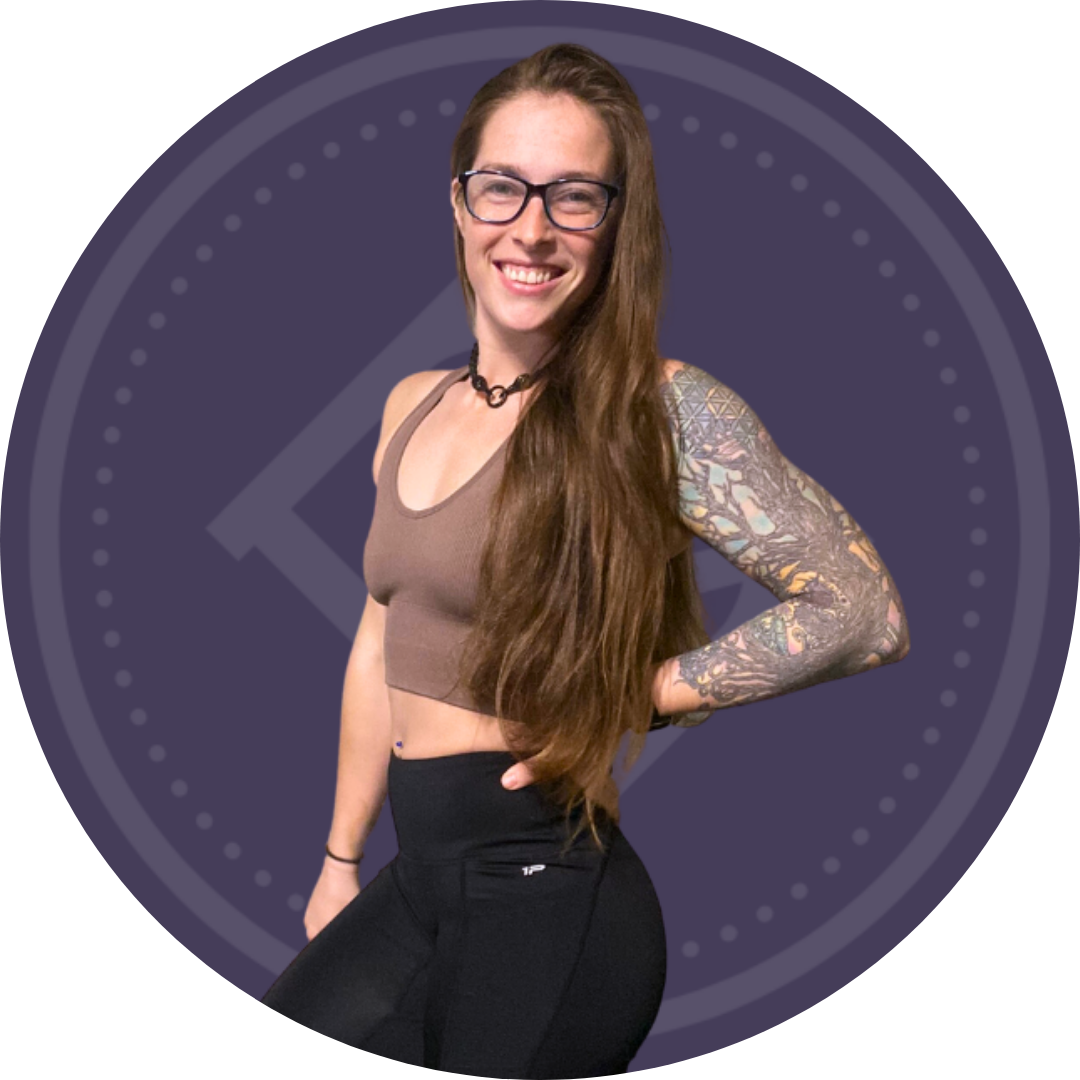
Coach Brenna Vidal
Founder of Fantasy Fitness + Sovereign of the Order of Legends
CPT, CNC, YFFR, RYT, KYT, PSYC BA, BSW, CWCM, Black Belt
References:
Centers for Disease Control and Prevention. (2023). Sleep and sleep disorders. https://www.cdc.gov/sleep
National Heart, Lung, and Blood Institute. (n.d.). Sleep deprivation and deficiency. National Institutes of Health. https://www.nhlbi.nih.gov/health/sleep
National Sleep Foundation. (n.d.). Sleep hygiene. https://www.sleepfoundation.org/sleep-hygiene
Huberman, A. (n.d.). Huberman Lab. https://hubermanlab.com
Sleep Research Society. (n.d.). Sleep research and guidelines. https://sleepresearchsociety.org
National Center for Biotechnology Information. (2019). Circadian rhythms. In StatPearls. https://www.ncbi.nlm.nih.gov/books/NBK519507/
National Center for Biotechnology Information. (2020). Autonomic nervous system. In StatPearls. https://www.ncbi.nlm.nih.gov/books/NBK538330/
National Center for Biotechnology Information. (2020). Cortisol physiology. In StatPearls. https://www.ncbi.nlm.nih.gov/books/NBK538239/
Medic, G., Wille, M., & Hemels, M. E. (2017). Short- and long-term health consequences of sleep disruption. Nature and Science of Sleep, 9, 151–161. https://doi.org/10.2147/NSS.S134864
National Center for Biotechnology Information. (2019). Blood glucose regulation. In StatPearls. https://www.ncbi.nlm.nih.gov/books/NBK279137/
National Center for Biotechnology Information. (2019). Energy balance and metabolism. In StatPearls. https://www.ncbi.nlm.nih.gov/books/NBK279077/
Potter, G. D. M., Skene, D. J., Arendt, J., Cade, J. E., Grant, P. J., & Hardie, L. J. (2016). Circadian rhythm and sleep disruption: Causes, metabolic consequences, and countermeasures. Endocrine Reviews, 37(6), 584–608. https://doi.org/10.1210/er.2016-1083
National Center for Biotechnology Information. (2021). Caffeine pharmacology. In StatPearls. https://www.ncbi.nlm.nih.gov/books/NBK519490/
He, S., Hasler, B. P., & Chakravorty, S. (2019). Alcohol and sleep-related problems. Current Opinion in Psychology, 30, 117–122. https://doi.org/10.1016/j.copsyc.2019.03.003
Sleep Foundation. (n.d.). Cognitive behavioral therapy for insomnia (CBT-I). https://www.sleepfoundation.org/insomnia/treatment/cognitive-behavioral-therapy-insomnia
No content on this site is intended to replace direct medical advice from your doctor or another qualified clinician. Always consult with a healthcare professional for personalized guidance.


Comments