


The Rogue's Secret: Self-Defense...NOT Martial Arts 👀
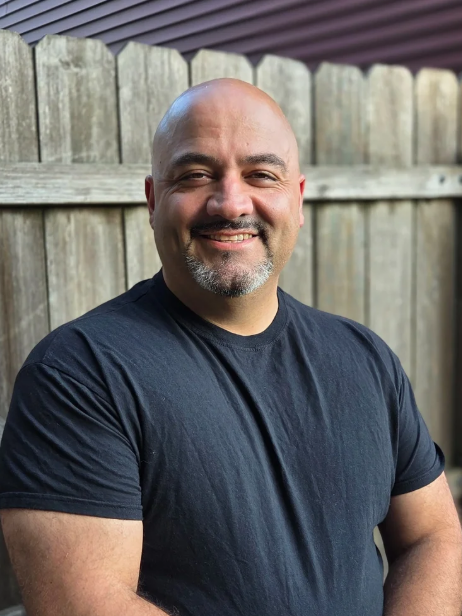
Vanguard Alliance Partner — Guest Contributor:
Vincent J. Pontillo Jr. | Vince Joseph's Self-Protection Systems
What does it actually mean to know how to protect yourself?
A Rogue knows that survival isn't always about having the sharpest blade or being the strongest person in the room. Sometimes it's about noticing what others miss, recognizing when something isn't right, and knowing when to change course before danger finds you.
Our first Vanguard Alliance Partner Feature introduces Vincent J. Pontillo Jr., founder of Vince Joseph's Self-Protection Systems (SPS). Vince takes a different approach to personal protection, emphasizing situational awareness, threat recognition, decision-making, and understanding how to avoid or navigate dangerous encounters.
In this article, adapted from his upcoming book, Vince challenges some common assumptions about martial arts and self-defense. He explores why we train, what different disciplines can and cannot teach us, and why recognizing a dangerous situation before it escalates may be one of the most important skills we can develop.
Because sometimes the greatest demonstration of skill isn't winning a fight. It's recognizing the danger, choosing your move, and getting away safely.
Know Your Mission: Why Do You Train?
At the most basic level, there are essentially four categories of why someone would want to train in a combative discipline: competition, cultural study, health or personal protection. There are sub-categories and numerous variations under each one, but at their core they fundamentally fall into one of these four categories. Understanding this distinction and planning your training accordingly can save you years of frustration, confusion, mismatched expectations and unrealized results.
The most important thing to do before starting to train in a martial art is figuring out exactly what your goals are and finding the right art for pursuit of those goals. None of these goals are more important than the others and you do not have to pigeonhole yourself into just one; it is perfectly fine to train for more than one, even all four! What does matter is honesty, with yourself first, and then with your instructor. If you don’t know what you want out of training, you can’t reasonably evaluate whether what you’re doing is actually serving you, and neither can your instructor.

On the other side of this coin, it is critical for the instructor to be just as honest with their student. Any self-respecting instructor should make it their responsibility to fully understand the ideas, the theories, and the applications behind what they are teaching. As someone who teaches both martial arts and reality-based violence analysis, I like to think I have done a pretty good job of compartmentalizing the different ideas and communicating those ideas to my students.
Unfortunately, there are many instructors out there who do not. I have seen jump-spinning heel kicks taught as “martial arts for the streets.” I once saw a rear neck break performed on a grounded, face down, unarmed opponent taught as “self-defense.” There is not a single court of law in the world that would consider that “self-defense;” that’s manslaughter at best, premeditated murder at worst.
While some of these instructors are testosterone fueled, wanna be alpha males or snake oil salesmen, the vast majority of them are well meaning; they just don’t understand where the lines are between fighting, martial arts and the real world of violence. Delineating the different goals like this isn’t meant to box you in or diminish any one particular path. It’s meant to create clarity and mindfulness in your training. Too many people drift through years of training without ever stopping to ask why they are doing what they are doing, and then wonder why their progress feels hollow or misaligned, or when some of their “arsenal” doesn’t work the way they have been conditioned to believe it will.
Think of it like learning languages. You can study Spanish, German, and Japanese. You can even study all of them at the same time, but if you start mixing vocabulary and grammar rules indiscriminately, you’re going to confuse yourself (and your training partners) very quickly. You will also be setting yourself up for failure when you travel to Japan and think you can get by just fine by speaking Spanish the whole time. The physical arts work the same way. Each goal demands a different way of thinking, training, and application.
One of the most common problems I see, especially with adults starting martial arts later in life, is that they walk into a school without clearly defining why they are there. When your expectations don’t line up with the reality of the training process, that’s when people get frustrated, quit, bounce from system to system, or develop a dangerous false sense of security over one’s own abilities.
This is also where marketing slogans and fantasy-based thinking do real harm. If someone tells you that their system will make you healthier, happier, spiritually fulfilled, competition-ready, and street-lethal all at once, you should immediately be skeptical. The general rule of thumb, not just for martial arts but for LIFE is if it sounds too good to be true, then it probably is!
The important thing to remember when you are training towards multiple goals is to make sure you compartmentalize your training because each goal has a different mindset and training methodology. Understanding where one idea ends and the next one begins is just as important as learning the physical movements, if not more so. There are certain elements that co-relate to the other categories, but ultimately, the goals are different and need to be trained differently.
The Art of the Fight: Competition & Combat
This would be for people who are either interested in competing or happen to like a training style that is based around fighting or competition. Competition-based training thrives on strict rulesets, timed rounds, and will usually involve a lot of physical conditioning, cardio, and regular drilling of the “fundamentals.”
Most of the MMA/”Fighting” arts will fall into this category: systems like Muay Thai, Brazilian Jiu Jitsu, Western Boxing, etc. Competition doesn’t necessarily mean you personally want to compete; it means that these arts were originally designed for competition and the training methodology they used is built around that mindset. This type of training might resonate with you, even if you don’t wish to compete directly, and that is perfectly fine!
Competition arts are brutally honest. They can teach you a lot about yourself, and they are fantastic at developing specific attributes that will translate into other aspects of your training: timing, conditioning, balance, reaction time, and the ability to perform under pressure just to name a few. Where people often get into trouble is assuming that success in competition automatically equals an understanding of real-world violence. One does not equal the other, not even close. While certain lessons and acquired skills do translate from one to the other, you have to always be mindful of exactly what you are training, what the goal of the lesson is, and how it fits into your overall training regimen.
Study the Craft: Martial Arts, Culture & Tradition
This is when you want to study a particular art because you find the history or culture of it interesting, or you like the way that art moves and you want to move your body that way. This goal usually goes beyond the physical and the training can be deeply philosophical, even spiritual.

There is tremendous value in studying something simply because the movements and the theory speak to you. That is a beautiful way to connect to a specific culture and experience their heritage, tradition, and philosophy through martial arts. Literally any discipline from Tai Chi to Hapkido to Fencing could fall into this category depending on what works for you and how you want to move. While there are certainly martial applications that could be gleaned, the priority here is not fighting. It is simply learning to move your body a certain way, and that is perfectly valid. Problems arise only when cultural study is mistaken for functional applied violence
There is nothing “less than” about this path. In many ways, it’s one of the most honest reasons to train, as long as you remember that appreciation and application are not the same thing. Appreciating the art and relying on it in a violent encounter are two very different things. Many martial arts have valid lessons that are translatable to applied violence, but to rely on complex martial arts techniques in a real world violent situation is a recipe for disaster.
Outsmart, Outlast: The Health Benefits of Training
Health doesn’t need to just mean physical, although that is certainly a big part of it. Health can mean mental, emotional or even spiritual health. For many (myself included), martial arts can be very therapeutic. The training you get through a martial art provides structure. It gives you access to a community. It gives you measurable progress that you can observe in real time through your body’s expanded potential. All of this increases self-confidence and self-esteem. This is where martial arts quietly save lives without ever throwing a punch.

Just about every type of martial arts training requires physical exercise, but there is also a social camaraderie that comes with training, and a sense of accomplishment you get by completing tests or pushing your body to do things you never thought possible. Martial Arts can also provide structure and a sense of accomplishment. Whatever it is you are seeking, the study of martial arts can absolutely make you a happier, healthier person. This is one of the most underappreciated benefits of training, and one that often keeps people on the mat long after other goals fade.
The Secret: Self-Defense Is Not a Martial Art
Ok. This is going to anger a lot of people in the martial arts community but…
....here goes...DEEP BREATH....
“THEREISNOSUCHTHINGASABESTMARTIALARTFORSELFDEFENSE!!!!!”
There. I said it.
It might be angering to some of you reading, but it's the truth. Self-Defense is NOT a “martial arts” term; it's a legal term. Saying “I know how to defend myself because I train XXX Martial Art” is like saying “I know how to build a house because I can use a screwdriver.” While knowing how to use a screwdriver and the lessons a screwdriver can teach you about construction are necessary for building a house, trying to build a house using only a screwdriver is a guaranteed way to fail at the task of house building.
Self-defense is a concept used to legally justify in a court of law physically retaliating against someone meaning to do you harm. To believe that you know how to defend yourself solely because you train in a specific martial art or fighting system is setting yourself up for critical failure. Martial Arts teach you body mechanics, balance, structure, hand eye coordination, and a plethora of other skills.
They DO NOT teach you how to recognize the signs of a threat while you’re out in public.
They DO NOT teach verbal de-escalation skills.
They DO NOT teach you to recognize the early warning signs of predatory behavior.
And they certainly DO NOT teach you the legal ramifications of “kung fu-ing” your attacker into oblivion.
This is not an indictment of martial arts. I love martial arts. I have been training in various martial arts for almost four decades and I encourage anyone and everyone to train as well. My indictment is of misplaced expectations. You have to understand what specifically you are doing and why you are doing it.
A Fight You Avoid Is a Fight You Win
One of the biggest misconceptions about personal protection is that it starts when the first punch is thrown. The bad guy in the alley jumps out and swings the pipe wrench at you.
You duck and go into this extraordinary combination of strikes that would make John Wick pee-pee in his pants, thoroughly dispatching your attacker and saving the day for the allies. That scenario is exciting and ego-massaging…but it’s a fantasy. Real violence almost never works that way.

In reality, violence prevention begins long before any physical threat ever appears. Situational awareness, the ability to understand & adapt to your environment and knowing when it's time to leave are the best ways to defend yourself. Physically fighting off an attacker is by far the smallest percentage of what real violence prevention actually is and is by far what most self-proclaimed “experts” focus on.
Real-world violence has a before, a during, and an after. Unfortunately, most of the martial arts training I have experienced tends to ignore two of the three.
Focusing only on the physical retaliation of an attack is a horrifically incomplete way to train for personal protection, no matter how much you say “this is how it works in the street….” The physical attack is not the be all and end all that many martial arts instructors make it out to be - it's the MIDDLE point of the altercation. If you aren’t also training in situational and environmental awareness, verbal de-escalation, threat recognition, social psychology, first aid (both physical and psychological), recognizing the signs of physical/emotional trauma, and keeping current on your local laws regarding physical retaliation, then you are not applying real world violence. Period.
Being able to avoid the problem entirely, or recognizing when a situation is becoming dangerous and choosing to remove yourself before violence becomes necessary is true personal protection in its purest form. My Kempo Instructor used to say “I’ve won every fight that I wasn’t in.” Physical retaliation is the last resort, not the starting line.
Trust your intuition!
If a person or a situation feels “off” to you, then it probably is. Leave.
When you notice that a conversation is getting heated, find an exit and step away. Take your face out of your device and stay in touch with your surroundings.
These may seem like “common sense” but so many people make the wrong decision when the fecal matter hits the oscillating blades. Be it ego, or lack of awareness/understanding, or righteous indignation, far too many people walk into the lion's jaws.
When you can spot the warning signs early and remove yourself from the situation before it becomes a violent confrontation, you circumvent the need for physical retaliation entirely — and that is the most successful
outcome possible.
A fight you avoid is a fight you win.
The Rogue's Instinct: Continue Your Training
Want to put these concepts into practice? Rogue's Instinct: Empty Hand Defense & Threat Recognition is a collaborative four-week program with Vince Joseph's Self-Protection Systems (SPS), available in the Legends' Nexus App.
Across 12 sessions (3 days per week, approximately 4–6 minutes each), explore:

Week 1 - Awareness & Threat Recognition:
Environmental awareness and pre-attack indicators.
Week 2 - Verbal De-Escalation & The CHEET Principle: Aggressor recognition, communication, positioning, and de-escalation.
Week 3 - CHEET Principles in Practice:
Tactical concepts and standing scenarios.
Week 4 - Ground Scenarios & Applied Practice:
Ground-position demonstrations and practical drills.
No previous fighting experience or specialized equipment required. An open, unobstructed space is needed for movement and drills.
Find Rogue's Instinct under Programs in the Legends' Nexus App to continue exploring practical personal protection with Vince.
A true Rogue knows that the smartest move isn't always the boldest one. Sometimes it's recognizing the danger, choosing your exit, and making it home safely.

About the Vanguard Alliance Partner
Vincent J. Pontillo Jr.
Owner, Founder & Head Instructor

Comments